


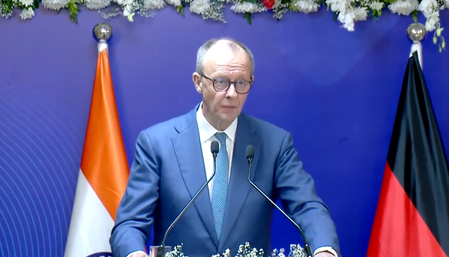
German Chancellor Friedrich Merz expressed a desire to enhance the relationship between Germany and India to a higher level. During a joint press conference with Prime Minister Narendra Modi in Ahmedabad, Merz emphasized the importance of deepening cooperation between the two nations. He highlighted the shared values and interests that underpin the strategic partnership amid global geopolitical shifts.
Merz thanked PM Modi for the warm welcome and described the visit to Mahatma Gandhi’s birthplace as a significant gesture symbolizing the strong bond between India and Germany. He acknowledged the historical significance of Ahmedabad as the starting point of Gandhi’s non-violent struggle for freedom and democracy.
Emphasizing the economic dynamism of Gujarat, Merz underscored the mutual commitment to political values, economic potential, and educational cooperation between India and Germany. He stressed the need to strengthen strategic partnerships in the face of evolving geopolitical challenges and the resurgence of protectionism worldwide.
Merz highlighted the joint focus of India and Germany on free trade and open markets, opposing protectionist tendencies and unilateral dependencies in global supply chains. He described India as a pivotal partner in the Indo-Pacific region and emphasized the importance of reducing economic vulnerabilities through enhanced cooperation.
The German Chancellor identified India as a preferred partner for Germany, citing shared fundamental values and interests that form the basis of a renewed and intensified partnership. He emphasized the need for broader international partnerships, particularly in the context of evolving global power dynamics and security challenges.
Merz outlined Germany’s commitment to promoting a global order based on freedom and security, citing Russia’s actions in Ukraine as a significant example of the changing world order. He expressed readiness to deepen collaboration with India in defense industries and economic ties, highlighting joint military exercises and strategic agreements aimed at enhancing mutual security and reducing dependence on external sources.
