


The National Steering Committee has given the green light to the Strategic Investment Plan for the Visakhapatnam ITI Cluster in Andhra Pradesh. This approval marks the first proposal to be cleared under the Pradhan Mantri Skilling and Employability Transformation through Upgraded ITIs (PM-SETU) scheme. The proposal, submitted by ArcelorMittal Nippon Steel India (AM/NS India), has made Andhra Pradesh the pioneer state to operationalize an industry partnership under PM-SETU by bringing on board an Anchor Industry Partner (AIP), as per the Ministry of Skill Development and Entrepreneurship (MSDE).
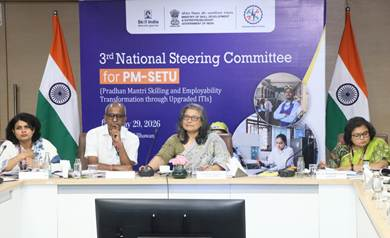
The decision was made during the third meeting of the National Steering Committee organized by the ministry. This milestone approval signifies the initial concrete step towards realizing PM-SETU’s vision of transforming government-run Industrial Training Institutes (ITIs) into industry-managed, outcome-oriented institutions through collaborations between state governments and prominent industry players. The meeting was overseen by MSDE Secretary Debashree Mukherjee and attended by Director General of Training (DGT) Dilip Kumar, along with senior representatives from central ministries, participating state governments, industry bodies, and development partners.
Officials highlighted that the approval of the Visakhapatnam cluster is a significant achievement in implementing the industry-led Hub-and-Spoke model envisioned under PM-SETU. It is anticipated to serve as a blueprint for other states aiming to enhance industry involvement in vocational education and training. Additionally, the NSC assessed the overall progress of PM-SETU implementation in participating states, focusing on enhancing industry participation, governance structures, financial sustainability of special purpose vehicles (SPVs), and expediting project execution.
PM-SETU, a key government initiative with a budget of Rs 60,000 crore, aims to revamp 1,000 government ITIs through an industry-led Hub-and-Spoke model emphasizing infrastructure modernization, increased industry engagement, and enhanced employability outcomes. Currently, 32 states and Union Territories have established State Steering Committees, while 12 states and UTs have issued Requests for Proposals (RFPs) to invite industry participation in selecting anchor industry partners.
