


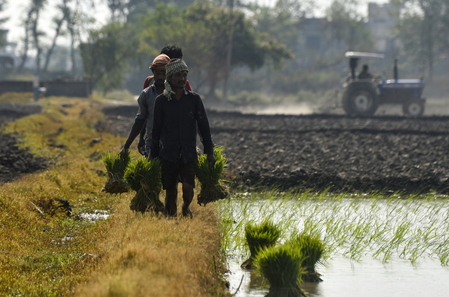
Nearly 80 crore beneficiaries of welfare schemes, including the Pradhan Mantri Garib Kalyan Anna Yojana (PMGKAY), are set to receive higher quality rice following a government decision to upgrade the rice specifications after almost three decades. The Cabinet Committee on Economic Affairs (CCEA) approved this reform, as announced by Prahlad Joshi, Union Minister of Consumer Affairs, Food and Public Distribution.
Under the revised policy, raw rice provided through PMGKAY will now have a maximum of 10% broken grains, down from the previous 25%. Similarly, parboiled rice under these schemes will contain a maximum of 5% broken grains, reduced from the earlier 16%. The procurement of the improved-quality rice will start immediately and will be implemented across all procuring states by the Kharif Marketing Season (KMS) 2027-28 in a phased manner.
The distribution of the enhanced-quality rice under PMGKAY and other welfare programs will also be phased in to ensure a smooth transition to the new specifications nationwide. This move underscores the government’s commitment to food security and improving the quality of food grains for over 80 crore beneficiaries, promising better grain integrity, appearance, and consumer acceptability without altering their entitlements.
The reform includes utilizing broken rice generated during milling for other purposes under the new specifications, aiming to rationalize transportation, storage, and handling costs. By storing broken rice in HDPE bags instead of jute bags, an annual cost reduction of Rs 2,161 crore is anticipated through streamlined logistics, storage, and packaging. Additionally, the sale of broken rice is expected to create extra revenue, easing the food subsidy burden.
The proposal has been successfully piloted in states like Haryana, Andhra Pradesh, Punjab, Odisha, Telangana, and Chhattisgarh, demonstrating the feasibility of producing improved-quality rice at scale. As part of the reform, QR-code tagging of rice bags will be implemented to ensure end-to-end traceability, enhancing transparency, accountability, and inventory management in the Public Distribution System to prevent leakages.
