


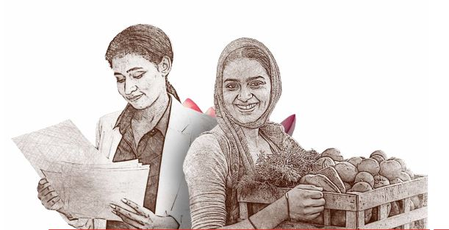
The government announced the initiation of the ‘National Campaign on Entrepreneurship’ with a primary goal to train 50,000 community resource persons (CRPs) in enterprise promotion and provide Entrepreneurship Development Programme (EDP) training to 50 lakh SHG members under the Deendayal Antyodaya Yojana–National Rural Livelihoods Mission (DAY-NRLM). The DAY-NRLM aims to enhance the income levels of rural women by promoting sustainable livelihoods through non-farm rural enterprises.
The Ministry of Rural Development emphasized the significance of promoting non-farm rural enterprises as a crucial means to achieve the transformational goal of enhancing rural women’s income levels. Various successful enterprise models, such as the ‘Star-up Village Entrepreneurship Programme,’ have showcased the effectiveness of trained community cadres in facilitating enterprise identification, start-up support, mentoring, and guidance at the grassroots level.
In a commitment to empower SHG women members, the government aims to enable at least 3 crore Lakhpati Didis, referring to women earning Rs 1 lakh or more annually. Achieving the Lakhpati Didi targets requires a substantial expansion of the existing cadre to meet the set objectives. The National Campaign on Entrepreneurship is seen as a strategic avenue to advance enterprise development in rural India, stimulate local economic growth, and unleash the entrepreneurial capabilities of SHG women.
The focused campaign is expected to not only produce numerous community resource persons but also stimulate millions of rural entrepreneurs, fostering a resilient, inclusive, and self-reliant non-farm rural economy. It is envisioned to create opportunities for connecting grassroots enterprises with formal financial institutions for enterprise loans, thereby contributing to the economic empowerment of rural women and sustainable livelihoods.
The Lakhpati Didi Scheme, operating under the Deendayal Antyodaya Yojana–National Rural Livelihoods Mission, aims to empower rural women by ensuring that SHG members earn a sustainable income of at least Rs 1 lakh annually. By supporting small businesses, enhancing skills, promoting financial literacy, and facilitating access to loans, the scheme strives to enable financial independence among women, consequently improving their families’ living standards.
