


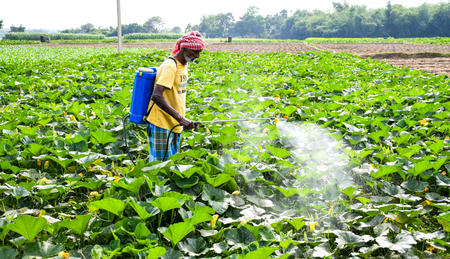
The government has issued 14,692 show-cause notices, suspended or cancelled 6,373 licenses, and registered 766 first information reports (FIRs) to prevent the diversion and misuse of fertilisers during the Kharif and Rabi seasons of 2025–26. These measures aim to protect farmer interests and maintain the integrity of the national fertiliser supply chain. Collaborating with state and district authorities, the Department of Fertilizers (DoF) and the Department of Agriculture and Farmers’ Welfare (DA&FW) conducted extensive enforcement actions, including inspections and legal proceedings.
Imbalanced fertilisation not only leads to soil degradation but also contributes to environmental pollution and health hazards. The adverse effects extend to the livestock sector, affecting animal health and productivity due to nutrient deficiencies in crops grown on depleted soils. This imbalance poses a significant challenge to the sustainability and efficiency of integrated crop-livestock systems in the long run.
To address these issues, the government has been advocating for balanced fertilisation to enhance soil health and support sustainable agricultural productivity. The soil health card initiative plays a crucial role by providing farmers with detailed insights into their soil’s nutrient status and physical properties. It also offers tailored recommendations on the use of chemical fertilisers, bio-fertilisers, organic inputs, and soil treatments for effective soil health management and informed decision-making.
By July 2025, the government had conducted over 93,000 farmer training programs, around 6.8 lakh field demonstrations, and numerous awareness campaigns to promote balanced nutrient management. The distribution of more than 25.55 crore soil health cards nationwide by mid-November 2025 highlights the scheme’s extensive reach and impact in fostering sustainable agricultural practices.
