


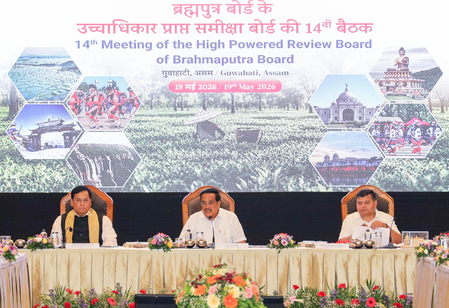
The government has announced plans to invest Rs 4,800 crore in various projects across the northeast region in the next five years. These projects will focus on developing community jetties, cargo vessels, dredgers, and cruise terminals to enhance connectivity and logistics efficiency while creating employment opportunities in riverine areas.
The Ministry of Ports, Shipping, and Waterways revealed that the Brahmaputra Board will undergo a transformation into a modern, technology-driven river basin organization. This transformation will involve the implementation of digital governance systems, data-driven project monitoring, and the revitalization of research institutions like the North Eastern Hydraulic and Allied Research Institute (NEHARI).
Union Minister Sarbananda Sonowal highlighted the government’s efforts to turn the Brahmaputra into a multi-functional economic corridor. Emphasizing the river’s potential as a national asset for fostering connectivity and economic growth in the northeast, Sonowal underscored the significance of this strategic initiative.
The Inland Waterways Authority of India (IWAI) is actively working to unlock the economic potential of the Brahmaputra, designated as the National Waterway 2 (NW2). This initiative aims to establish an inland transport corridor connecting Assam and other northeastern regions to Kolkata and Haldia ports through the Indo-Bangladesh Protocol Route (IBPR), promoting sustainable and efficient transportation methods.
Projects totaling around Rs 751 crore have already been completed in Assam, including the development of key terminals and facilities. Ongoing initiatives exceeding Rs 1,100 crore involve the enhancement of the Brahmaputra’s fairway, construction of ship repair facilities, tourist jetties, and the establishment of a Regional Centre of Excellence in Dibrugarh.
Union Minister Sonowal commended the launch of the State Water Reforms Framework (SWRF) by the government to bolster sustainable water governance and reform efforts nationwide. By incorporating modern technologies such as GIS-based planning and digital monitoring, the government aims to create efficient and eco-friendly transport corridors along waterways while preserving the region’s ecological balance.
The inland water transport sector in India, particularly in the northeast, has experienced significant growth, with cargo movement on national waterways surging from 18 million metric tonnes in 2014 to over 218 million metric tonnes projected for 2025-26. This growth underscores the sector’s expanding role in the national logistics chain.
