


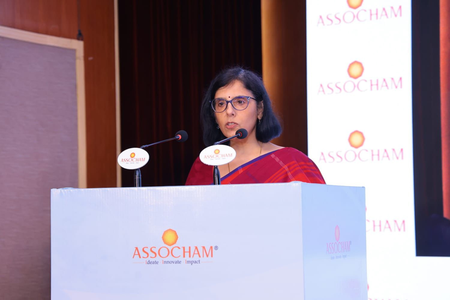
The government, in collaboration with states and industry stakeholders, is focused on implementing new labour codes efficiently. These codes aim to reduce compliance burdens, improve worker welfare, and enhance India’s global competitiveness. Labour Secretary Vandana Gurnani emphasized the importance of strong cooperation among the government, industry, and workers for the success of these reforms.
The new labour codes consolidate 29 existing laws into four codes, significantly reducing the number of sections and rules to simplify India’s labour compliance framework. Embracing a digital-first approach, the government plans to shift towards risk-based, technology-enabled inspections that prioritize facilitation over enforcement.
Gurnani highlighted the need for workplace safety, timely wage payments, and social security compliance as crucial governance priorities for industries. She emphasized that these factors directly contribute to increased productivity, workforce confidence, and industrial harmony.
Labour reforms are seen as an opportunity rather than a mere compliance requirement, with expectations of supporting higher exports, formalization of employment, and increased investment inflows into India. The simplified digital compliance systems are anticipated to benefit micro, small, and medium enterprises (MSMEs) significantly by reducing procedural complexities.
Central Provident Fund Commissioner and Employees’ Provident Fund Organisation (EPFO) CEO Ramesh Krishnamurthi mentioned EPFO’s efforts to enhance digital service delivery in alignment with the new labour code ecosystem. The EPFO is introducing API-based return filing systems, automated account transfer facilities, and simplified withdrawal mechanisms to improve compliance ease for employers and workers.
Inspections under the social security framework are set to rely more on data analytics and web-based systems to identify high-risk non-compliance cases, enhancing transparency and efficiency. The seminar on New Labour Codes witnessed participation from industry leaders, HR professionals, labour law experts, and representatives from various sectors like textiles, manufacturing, infrastructure, and technology.
