


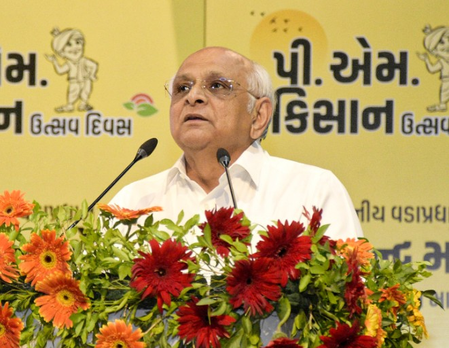
Gujarat Chief Minister Bhupendra Patel encouraged farmers to adopt planned and scientific agricultural methods due to anticipated below-normal rainfall linked to the El Niño phenomenon. He highlighted the state’s improved irrigation infrastructure and water management systems that reduce reliance on monsoon fluctuations. A state-level event called “PM Kisan Utsav Diwas” was organized in Gandhinagar following the release of the 23rd installment of the PM-Kisan scheme.
Chief Minister Patel emphasized the government’s focus on water conservation, natural farming, and modern agricultural development. He mentioned that even with lower rainfall, planned farming using a scientific approach is feasible. The shift towards structured irrigation-based farming through Narmada canal networks has enabled farmers in various regions to cultivate multiple crops throughout different seasons.
In light of the expected decrease in rainfall, Patel advised farmers to opt for low-water-consuming crops and adhere to scientifically guided farming practices instead of reacting to seasonal uncertainties. He stressed the strengthening of irrigation management by maximizing the utilization of Narmada waters and systematic storage in lakes and reservoirs. Efforts have been made to enhance water availability for agriculture by expanding the permissible limit for filling lakes in the Narmada command area.
Small and marginal farmers have been provided with increased access to fencing schemes and support for storage infrastructure to minimize crop losses and enhance market reach. Initiatives like the ‘Catch the Rain’ campaign and ‘Amrit Sarovar’ project have resulted in the construction of more than 75 Amrit Sarovars in each district. The government is actively working on groundwater recharge through rainwater harvesting, with each MLA allocated Rs 50 lakh for water conservation projects.
