


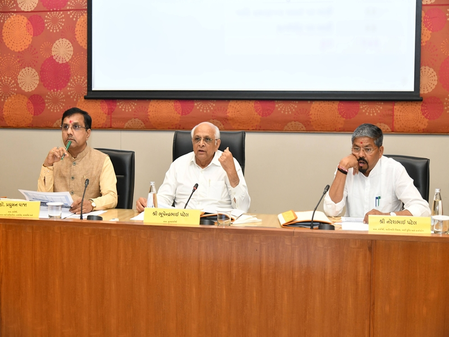
Gujarat has achieved the top rank nationwide in addressing complaints received through the National Helpline Against Atrocities, with a disbursement of more than Rs 23 crore in 2025. Officials, following a review meeting chaired by Chief Minister Bhupendra Patel, highlighted that this assistance primarily focuses on cases involving Scheduled Castes (SCs) and Scheduled Tribes (STs). The state-level Vigilance and Monitoring Committee, established under the Scheduled Castes and Scheduled Tribes (Prevention of Atrocities) Amendment Rules, 2018, assessed the implementation of protective measures.
A presentation during the meeting revealed that the state has successfully resolved 100% of the complaints received via the helpline, which has been operational through a modern call center since March 2022. The committee extensively reviewed cases registered in 2025 under the Scheduled Castes and Scheduled Tribes (Prevention of Atrocities) Act, 1989, and the Protection of Civil Rights Act, 1955. This review encompassed the assistance provided to victims and initiatives undertaken to foster social cohesion.
Chief Minister Bhupendra Patel emphasized the importance of sustaining efforts to enhance social harmony through sensitive and empathetic collaboration between public representatives and officials. He instructed the convening of District Vigilance Committees every three months in all districts under the leadership of district collectors. Officials disclosed that victims in atrocity cases received Rs 23.62 crore between January and December 2025.
The review also acknowledged the existence of institutional mechanisms for prevention and response, such as the helpline system and regular monitoring at the district level. Additionally, the meeting was briefed on the ‘Samaras Hostel’ scheme, initiated in 2016 to house students from diverse communities together. Approximately 1.03 lakh students have benefited from 23 hostels across 12 districts, with approvals for 11 boys’ and 14 girls’ hostels.
Furthermore, the meeting highlighted the operational special courts under the 1989 Act in the state, along with 16 dedicated special courts for expeditious disposal of atrocity cases. Tribal Development Minister Naresh Patel, Social Justice and Empowerment Minister Pradyuman Vaja, and Ministers of State Manisha Vakil, Ramesh Katara, Darshana Vaghela, Jayram Gamit, and P.C. Baranda were present at the meeting. Elected representatives from reserved constituencies for SCs and STs also participated and provided suggestions.
