


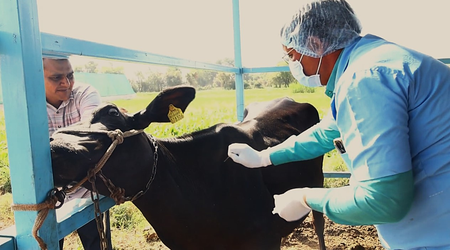
Gujarat has achieved a significant reduction in the spread of Foot and Mouth Disease (FMD) in livestock to 3% with an 80% herd immunity rate by 2025. This progress is credited to consistent mass vaccination efforts in the state. The campaign in Gujarat, led by Chief Minister Bhupendra Patel, focuses on enhancing animal health and boosting farmers’ incomes.
Jigar Patel, a farmer from Lodra village, emphasized the importance of regular vaccination for his 32 animals to maintain disease-free livestock and secure his income from milk production. The Animal Husbandry Department teams conduct free biannual vaccinations in the region. Mahendra Patel, the secretary of the local milk producers’ cooperative society, noted that around 50% of the animals in Lodra village have already been vaccinated against FMD.
Statewide, personnel from the Animal Husbandry Department and dairy cooperatives are actively administering vaccinations in villages, farms, and cattle shelters. This initiative is part of the Central Government’s Livestock Health and Disease Control Programme aimed at eradicating major animal diseases. Dr. Falguni Thakar, Director of the Gujarat Animal Husbandry Department, highlighted the success of the recent vaccination campaign that commenced on March 1 this year.
Efforts to combat FMD are supported by digital tracking under the National Digital Livestock Mission, where animals are assigned unique identities through ear tags and registered on the Bharat Pashudhan portal. This system enables authorities to monitor health records and vaccination status effectively. Gujarat’s livestock population, estimated at around 2 crore cows and buffaloes, with 1.71 crore eligible for FMD vaccination, is undergoing two rounds of vaccination in the 2025–26 financial year.
Authorities underscored the importance of reducing FMD incidences not only for rural economies but also to enhance India’s position in the global dairy export market. The disease, causing annual economic losses of approximately Rs 24,000 crore nationwide, significantly impacts farmers’ livelihoods. Continued vaccination drives and biosecurity measures are crucial in further reducing outbreaks, increasing milk yields, and ultimately eradicating the disease.
