


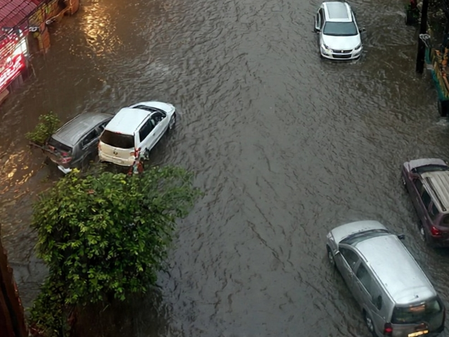
Heavy rainfall in the past few days has disrupted normal life in the north Bengal hills, leaving numerous tourists stranded in various hill stations. Landslides have severed road connections with the plains in multiple locations. Alipurduar district has witnessed submergence in various areas due to incessant rainfall, while the Torsa River’s water level has surged in Cooch Behar district. Traffic standstill has been reported on Falakata Road in Alipurduar.
In Mirik, a landslide occurred on Sunday morning after continuous overnight rain, prompting immediate debris clearance efforts. Simultaneously, parts of Alipurduar town are inundated due to the persistent downpour, leading to water accumulation in several sections. The closure of sluice gates due to rising water levels in the Dima and Kaljani rivers has hindered water drainage from the town.
The situation remains severe in Cooch Behar, where the Torsa River’s water level has risen significantly owing to continuous rainfall. The Madhupur area in Cooch Behar Block II has been affected by floods. BJP MLA Sukumar Roy from the Cooch Behar Uttar Assembly constituency visited the area on Sunday to assess the conditions.
Authorities are closely monitoring the weather and preparing to aid distressed individuals. Relief supplies are stocked at BDO offices, with civil defence personnel on high alert. A red alert for heavy rain is in effect in north Bengal until Monday, with Darjeeling, Kalimpong, Cooch Behar, Jalpaiguri, and Alipurduar districts expected to receive up to 200 millimetres of rainfall. North Dinajpur is under an orange alert, while thunderstorm and rain alerts are issued for South Dinajpur and Malda districts. The remaining districts are under a yellow alert for heavy rain.
The continuous rainfall has left a significant number of tourists stranded in Darjeeling, Kalimpong, and Mirik hill stations. Landslides have compelled detours and temporary stays in hotels until roads are cleared. Notably, numerous hotel booking cancellations have been recorded across various regions due to the adverse weather conditions.
