


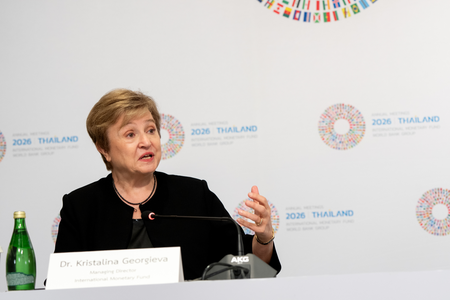
The head of the International Monetary Fund has raised concerns about a significant global economic shock caused by the Iran war. The disruption in energy supplies has led to a surge in prices worldwide, with effects expected to extend into the following year.
Kristalina Georgieva, Managing Director of the IMF, emphasized that the magnitude and duration of the disruption will determine the lasting repercussions. She highlighted that the impact is already widespread, affecting various sectors and nations differently.
Georgieva pointed out that the supply disruption has led to a global and uneven impact. Countries reliant on energy imports or situated near the conflict zone are facing the most severe consequences, while poorer nations with limited reserves are under immense strain. The shock has cascaded across multiple industries, impacting fuel availability, fertiliser supplies, transportation, and remittances.
The IMF chief expressed concerns about the ongoing stress in Asia, where energy rationing and supply shortages have hampered economic activities. She also warned of potential increases in global food prices due to higher fertiliser costs. Even in the United States, while the impact has been relatively moderate compared to other regions, there are warnings that rising prices could hinder efforts to control inflation.
Georgieva highlighted that the conflict’s impact is deeply embedded and that even a ceasefire would not bring immediate relief. She mentioned the prolonged effects of delayed shipments and infrastructure damage on the global economy. The crisis has disrupted a critical energy corridor, amplifying its economic repercussions across continents.
