


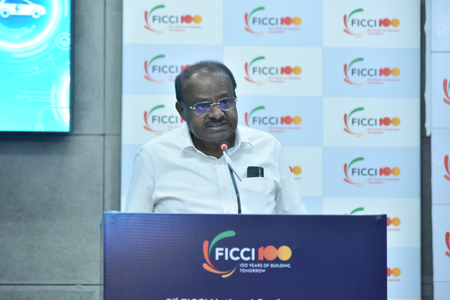
India has the potential to become a key global hub for electric mobility manufacturing and innovation, according to Minister of Heavy Industries and Steel, H.D. Kumaraswamy. He emphasized the importance of a clear policy direction and strong industry involvement in achieving this goal. Kumaraswamy highlighted the significance of electric mobility in India’s ‘Make in India’ agenda, aiming to boost domestic manufacturing and establish the country as a major production center for electric vehicles (EVs), batteries, and essential components.
The minister pointed out that India’s automotive component exports have nearly doubled in the past decade, reaching $16.9 billion from $8 billion. This growth signifies India’s increasing integration into global value chains and its emergence as a reputable manufacturing destination. Former NITI Aayog CEO Amitabh Kant noted that the global electric vehicles market is expected to grow significantly in the coming years, presenting India with an opportunity to position itself as a reliable EV manufacturing hub.
Kant emphasized that electric mobility is not just an environmental necessity but also a substantial economic, industrial, and technological opportunity for India. He stressed the importance of transitioning to electric vehicles as a crucial element of India’s future development vision. FICCI Green Mobility Committee Co-Chair Vikram Handa highlighted India’s progress in building a comprehensive electric mobility value chain, covering critical minerals processing, cell manufacturing, battery assembly, and the production of various types of vehicles and charging infrastructure.
