


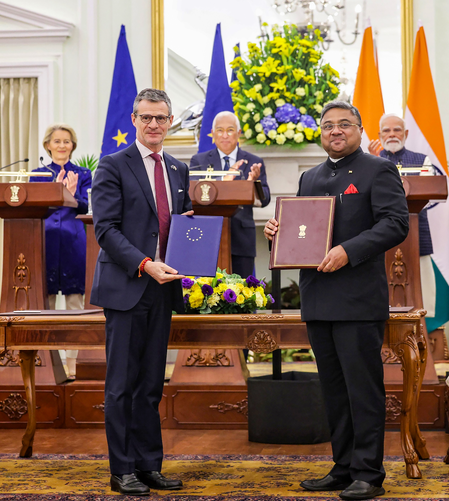
The India-European Union Free Trade Agreement, dubbed the mother of all trade deals, has sparked unease among Khalistanis. These groups, like Babbar Khalsa International and Sikhs for Justice, fear that closer EU-India ties could jeopardize their activities based in countries like Canada, Germany, and the UK. Despite India’s warnings about these groups being proscribed as terror outfits, some European nations have allowed them to operate freely, inciting concerns.
The Khalistani elements express apprehension that the trade deal may lead to what they term a “Free Transnational Terrorism Agreement.” They aim to leverage the situation to incite violence against Indians residing in European countries sympathetic to their cause. While the UK and Canada have taken action against such groups post India’s evidence sharing, the EU deal further intensifies the cooperation against terrorism, worsening the situation for Khalistanis.
Prime Minister Narendra Modi emphasized that the India-EU security and defence partnership will enhance collaboration in counter-terrorism, maritime, and cyber security. The leaders welcomed the EU-India Security and Defence Partnership, focusing on areas like maritime security, defence technology, cyber threats, and counter-terrorism. With a Security of Information Agreement in negotiation, the security cooperation between the two sides is set to strengthen.
Counter-terrorism experts predict heightened concerns among Khalistan forces due to the deepening security cooperation. Despite initial fear expressed by SFJ head Gurpatwant Singh Pannun, threats against India resurfaced, targeting events like the Beating Retreat Ceremony. Pannun’s warnings and false claims of Sikh oppression in India aim to internationalize the issue, though the movement lacks traction due to the absence of genuine oppression.
