


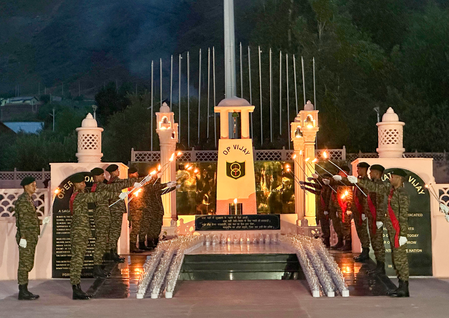
India commemorates the 27th anniversary of Kargil Vijay Diwas on July 26, remembering the successful Operation Vijay of 1999. This operation saw the Indian armed forces expel Pakistani infiltrators and regain control of the strategic heights of Kargil, reshaping the country’s security doctrine and national consciousness.
The victory in Kargil not only secured the border but also brought about significant changes in India’s security policies, military structure, and public awareness. It highlighted the importance of intelligence, surveillance, and inter-service coordination, leading to the formation of the Kargil Review Committee.
Following the Kargil conflict, the establishment of the post of Chief of Defence Staff (CDS) was recommended to enhance coordination among the Army, Air Force, and Navy. In 2019, the Narendra Modi government implemented this suggestion, creating the CDS role for better tri-service integration and setting up the Department of Military Affairs (DMA) to streamline decision-making processes.
To bolster its defense capabilities, India enhanced its intelligence infrastructure by establishing the Defence Intelligence Agency (DIA) and expanding satellite and drone-based border surveillance. The country also prioritized self-reliance in defense production, significantly increasing domestic manufacturing and exports while reducing dependence on foreign military technologies.
Moreover, India revamped its Border Security and Warfare Doctrine, abandoning previous practices of vacating high-altitude posts during winter and fortifying the Line of Control (LoC). The nation shifted from reactive defense to proactive, punitive retaliation against terrorism, as demonstrated in operations like Balakot airstrikes and surgical strikes post-Uri and Pulwama attacks.
The Kargil conflict marked a pivotal moment in India’s defense history, showcasing the country’s resolve and strategic capabilities. It not only elevated India’s global standing as a responsible nuclear power but also united the nation in support of its armed forces, honoring the sacrifices of brave soldiers like Captain Vikram Batra and others.
