


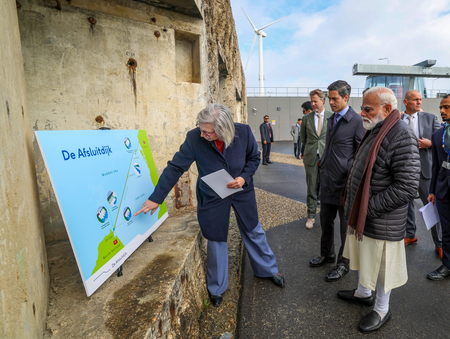
India and the Netherlands have rekindled their collaboration on the Kalpasar project, a move crucial for ensuring Gujarat’s long-term water security. This initiative holds the potential to enhance irrigation capabilities, boost renewable energy production, and improve regional connectivity if the ambitious infrastructure scheme comes to fruition. During Prime Minister Narendra Modi’s recent trip to the Netherlands, a Letter of Intent was inked between India’s Ministry of Jal Shakti and the Netherlands’ Ministry of Infrastructure and Water Management to bolster technical cooperation for the Kalpasar project.
The agreement aims to facilitate the planning and implementation of one of Gujarat’s most intricate water infrastructure projects, which has faced prolonged discussions over the years due to its engineering complexities and environmental considerations. The Kalpasar project envisions constructing a substantial dam across the Gulf of Khambhat to harness freshwater from seven rivers that flow into the sea, creating a vast reservoir intended for irrigation and drinking water supply. If realized, the endeavor is anticipated to bring irrigation benefits to around 10 lakh hectares of land in 42 talukas spanning nine districts of Saurashtra.
Apart from water storage, the proposal incorporates integrated renewable energy elements, with an estimated capacity of approximately 1500 MW of wind energy and 1000 MW of solar power. It also presents opportunities for fisheries development, tourism enhancement, and improvements in transport infrastructure. This engagement signifies a renewed focus for Gujarat on merging international technical know-how with longstanding domestic planning efforts for the Kalpasar project, which could potentially revolutionize water distribution systems, expand irrigation coverage, and bolster renewable energy capacity in the state.
