


India is set to construct its inaugural semi high-speed broad gauge rail corridor between Ahmedabad and Dholera in Gujarat, following the recent approval of the Rs 20,667 crore project by the Union Cabinet. This project, known as the Ahmedabad (Sarkhej)–Dholera semi high-speed double-line railway, marks Indian Railways’ first indigenous technology-based semi high-speed rail initiative. The corridor, spanning 134 km, will facilitate a semi high-speed train operating at 220 km per hour on a broad gauge track.
The railway route, designed for a maximum speed of 220 km per hour and an operational speed of 200 km per hour, is expected to host Namo Bharat trains in the future. Notably, the trains will be equipped with the advanced “Kavach 5.0” safety system, setting a new safety standard and automatic train protection. This project signifies a significant step in Indian engineering, self-reliance, and railway modernization, emphasizing the utilization of “Make in India” technology for a 220 km per hour semi high-speed model on broad gauge infrastructure.
The corridor will link Ahmedabad, the Dholera Special Investment Region (SIR), the upcoming Dholera International Airport, and the National Maritime Heritage Complex at Lothal. It will feature 13 stations and include the construction of three mega bridges, 74 km of viaducts, 39 road under bridges, and two rail-over-rail bridges, with a total track length of approximately 293 km. The Railway Ministry has set a target of completing the project within four years.
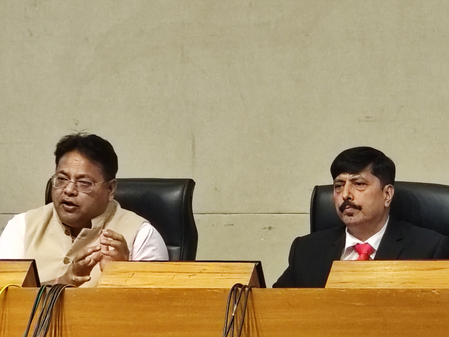
Gujarat Chief Secretary Manoj Kumar Das highlighted that the project will significantly reduce travel time and enhance multimodal transport connectivity in the region. The Sarkhej-Dholera semi high-speed double-line project is expected to elevate Dholera’s development, with travel time from Sabarmati to Dholera Airport reducing to 48 minutes and from Sarkhej to Dholera Airport to around 38 minutes. The corridor aims to provide comprehensive connectivity by integrating air, road, rail, and port infrastructure, with plans for Metro integration at various stations and connections to other key transport networks.
