


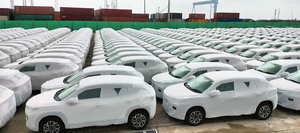
The Indian auto retail industry hit a milestone by delivering a record 2,96,71,064 units in FY26, marking a 13.30% year-on-year growth across five out of six vehicle categories. This growth signifies a significant achievement for the domestic auto sector, nearing the 3-crore mark in a financial year, driven by factors like enhanced affordability, increased demand in both urban and rural areas, and a diversified powertrain mix.
Two-wheelers saw a resurgence, surpassing pre-COVID levels by retailing over 2.14 crore units with a 13.40% growth, attributed to factors such as GST-driven affordability, improved rural cash flows, and an expanded product range catering to various consumer segments. Passenger vehicles (PVs) also excelled, crossing 47 lakh units for the first time, growing by 13% due to a robust new-model lineup, urbanization trends, and the rising preference for SUVs and alternative powertrains.
Tractors emerged as the star performer of the year, achieving a historic milestone by crossing 10 lakh retail units at an impressive 18.95% growth rate, reflecting favorable agricultural conditions like a good monsoon, strong rabi sowing, and improved farm economics. Commercial vehicles (CVs) witnessed their best-ever performance, surpassing 10 lakh units with an 11.74% growth, driven by infrastructure-related freight demand and a particularly strong MCV sub-segment. Three-wheelers continued their growth streak, setting a third consecutive annual record with an 11.68% increase, where electric vehicle adoption accounted for over 60% of the segment’s sales.
Construction equipment was the only category that experienced a decline of 11.70%, attributed to project delays and a high base affecting volumes. The implementation of GST 2.0 in September marked a turning point, significantly reducing the tax burden on mass-segment vehicles and enhancing real affordability, further stimulating consumer demand.
On the demand front, rural markets showed strong growth, narrowing the gap with urban areas, with rural retail expanding by 13.05% compared to 13.62% in urban regions. Looking forward to April, the industry anticipates a positive demand environment, with around half of dealers expecting growth and a significant portion foreseeing stable performance, reflecting a phase of transition post a robust March.
