


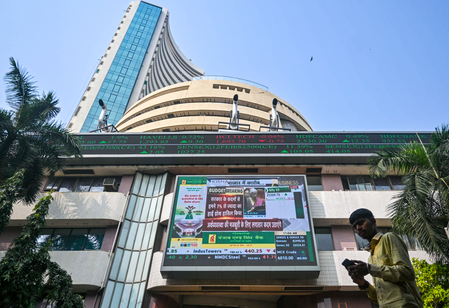
The Indian equity benchmarks faced significant losses during the week due to external uncertainties overshadowing domestic policy measures. Nifty dropped by 0.77% over the week, reaching 23,366, and fell by 0.21% on the last trading day. Sensex closed 116 points lower at 74,243, marking a decline of 0.16% for the week.
Geopolitical tensions in West Asia, impacting crude prices, continued to influence investor sentiment, although some relief was seen with a slight moderation in oil prices.
While Indian equities showed a mild negative bias and traded within a range, they experienced a modest recovery towards the end of the week. Analysts noted that liquidity support and currency stability by RBI MPC boosted confidence, but growth forecast revisions led to selective profit booking.
Efforts to ease access for global investors, reduce tax-related issues in bond markets, and attract capital inflows were highlighted as positive steps. The rupee strengthened against the US dollar, dropping below the Rs 95 mark, reflecting investor approval of the central bank’s initiatives to attract foreign capital.
Despite external challenges, sentiment in the market remained cautious yet stable, supported by strong domestic fundamentals. Market participants emphasized a focus on RBI’s stance sustainability, inflation trends, and bond yield trajectory.
Broad market indices diverged from benchmark indices, with Nifty Midcap100 declining by 1.57% and Nifty Smallcap100 edging down by 0.16% during the week.
Nifty 50 is anticipated to face strong resistance in the 23,450–23,550 region, with 23,250 as a crucial support area. In Bank Nifty, immediate resistance is expected around the 54,800–55,000 zone, while the 54,000–53,800 zone acts as an immediate support zone.
Investors are closely monitoring monsoon progress and its impact on rural demand. Geopolitical developments, crude price fluctuations, and updates on India–US trade discussions are seen as critical factors influencing market movements.
