


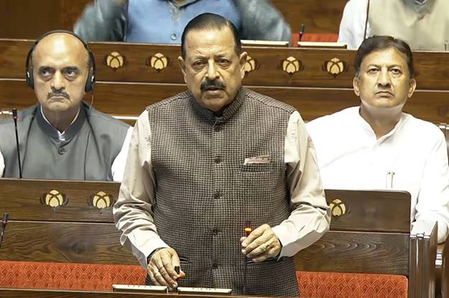
Union Minister of State for Science and Technology, Jitendra Singh, mentioned that the Indian Space Research Organisation (ISRO) has initiated programs to engage students and young researchers in satellite development and space missions. ISRO aims to democratize access to space technology, providing opportunities for students from various educational institutions, including those in tier-2 and tier-3 cities.
Under ISRO’s Student Satellite Programme, academic institutions and student teams collaborate with ISRO scientists to design and develop satellites. These student-built satellites receive support for integration and launch through ISRO missions. Additionally, internship and project trainee programs are available for students to work on advanced space technologies at ISRO centers.
To enhance academic involvement, Space Technology Incubation Centres (STICs) have been established to promote collaborative research between universities and ISRO scientists. The Indian National Space Promotion and Authorisation Centre (IN-SPACe) has also played a significant role in encouraging student engagement by organizing competitions focused on satellite and rocket design.
IN-SPACe has authorized 17 student satellites and payloads, with 11 successfully launched, involving institutions like the Indian Institute of Space Science and Technology and Indian Institute of Astrophysics. ISRO’s RESPOND program offers financial and technical support to universities for space research, while Regional Academic Centres for Space have been set up to expand space education access.
The government allocates approximately Rs 10 crore annually for student-focused outreach activities in space science and technology. These initiatives aim to create a more inclusive and innovation-driven space ecosystem in India.
