


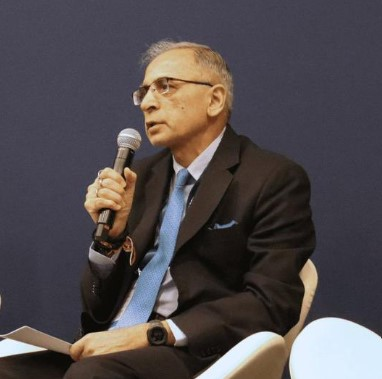
India’s Ambassador to the United States, Vinay Mohan Kwatra, reassured that the US-India relationship maintains robust bipartisan support and is flourishing in various sectors like trade, technology, defense, and critical minerals. Kwatra, speaking at the Capitol Hill Summit 2026, dismissed perceptions of strain in the relationship as not grounded in reality. He emphasized the shared values between the two nations, citing Prime Minister Narendra Modi’s address to the US Congress.
Kwatra highlighted the continuity in strengthening ties with India across different US administrations over the past two decades. He pointed out India’s economic progress since 2014 as a key factor driving increased engagement with the US. The ambassador mentioned the target of boosting bilateral trade between the two countries from $220 billion to $500 billion by 2030.
In terms of defense and security cooperation, Kwatra noted significant progress, including operational coordination and enhanced long-term defense frameworks. He underscored India’s status as the largest user of certain American platforms outside the US. Additionally, he outlined advancements in semiconductor, critical minerals, and civil nuclear cooperation, mentioning the opportunities created by India’s recent civil nuclear legislation.
On technology collaboration, Kwatra highlighted major American investments in India’s semiconductor and electronics sectors, with projects involving companies like Micron. He also defended India’s intellectual property protections, citing the presence of numerous global capability centers in the country, many of which belong to US firms.
Regarding educational cooperation, Kwatra mentioned India’s focus on establishing institutions of global excellence to attract international students and scholars. He praised the Indian diaspora in the US as a pivotal element in strengthening the bilateral partnership and fostering deeper political, economic, and cultural bonds between the two nations.
The summit, which convened lawmakers, diplomats, policy experts, and business leaders, occurred amidst discussions on trade disputes, visa restrictions, and geopolitical changes that have sparked debates on the future trajectory of the US-India relationship.
