


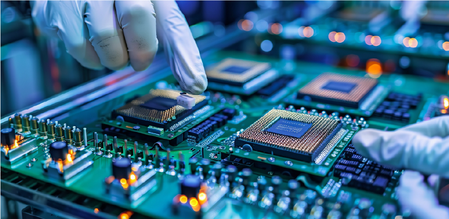
Over 100,000 individuals have signed up for India’s chip design training programs, with approximately 67,000 already completing the training, as per the government’s announcement. The initiative, led by the Ministry of Electronics and Information Technology (MeitY), aims to enhance India’s self-sufficiency in chip design, a critical sector for modern electronics, green energy, defense, and emerging technologies.
The Chips to Start-up (C2S) Programme, initiated in 2022 with a total budget of Rs 250 crore, lies at the core of this endeavor. This program encompasses nearly 400 organizations, including 305 academic institutions and 95 startups, with the goal of training numerous students, researchers, and engineers nationwide.
Students and institutions have collectively filed over 75 patents and are actively developing more than 500 IP cores, Application Specific Integrated Circuits (ASICs), and System-on-Chip (SoC) designs for various sectors such as telecom, automotive, defense, and consumer electronics. The C2S Programme also facilitates start-up incubation, technology transfers, and research publications, with a focus on producing industry-ready professionals across B.Tech, M.Tech, and PhD levels.
According to MeitY, this extensive program not only enhances India’s semiconductor human resources but also bolsters domestic technological capabilities, aligning with the country’s objective of achieving global competitiveness in chip design. By fostering collaboration among academic institutions, start-ups, research bodies, and industry partners, the government is fostering a robust ecosystem that promotes innovation, practical learning, and research simultaneously.
This initiative arrives at a crucial juncture when the global demand for semiconductors is escalating, and India is striving to lessen its reliance on imports, especially for high-tech and defense applications.
