


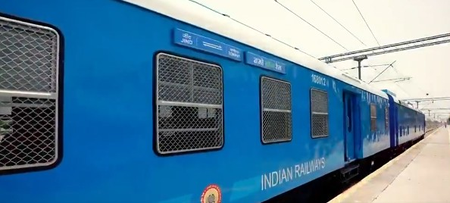
India’s first hydrogen train, a 10-coach model, completed a successful 1,200-kilometre journey, saving more than 3,200 litres of diesel. The train, which emits only water vapour, operates by generating electricity through a chemical reaction between hydrogen and oxygen.
This innovative train boasts zero tailpipe carbon emissions, making it an environmentally friendly mode of rail transportation. It features two hydrogen driving power cars that provide a total power of 2,400 kW, along with lithium iron phosphate batteries and hydrogen cylinders.
The hydrogen for the train is stored at high pressure and dispensed with a total storage capacity of around 3,000 kg. Equipped with multiple safety systems and adhering to international standards, the train recently completed successful operations between Jind and Sonipat, with trials on the Delhi route set to commence soon.
India’s Hydrogen Fuel Cell Train marks a significant step towards sustainable, zero-emission rail travel, showcasing the country’s dedication to clean transportation. Union Minister for Railways Ashwini Vaishnaw highlighted that India now holds the intellectual property rights for this indigenous technology, positioning the nation for potential future exports.
Vaishnaw emphasized the growing global importance of hydrogen as a fuel source and praised Indian Railways’ efforts to promote its use. The development of a 2,400 kW hydrogen propulsion system for the transportation sector, entirely indigenous, aligns with the vision of ‘Aatmanirbhar Bharat’ (self-reliant India).
