


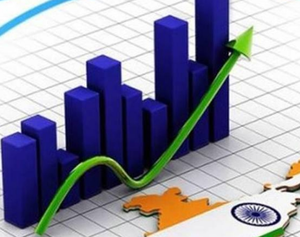
India is focusing on infrastructure-led growth, garnering international recognition. Prime Minister Narendra Modi’s government has been driving a significant economic transformation for over a decade, as per a recent report. The report by World Finance highlights India’s progress in areas like freight rail, green energy, manufacturing, and maritime trade.
The report emphasizes India’s remarkable advancements, such as electrifying 100% of its rail network, comparable to countries like Switzerland. Indian Railways has been extending its network by over 15 kilometers daily in the last six years. This expansion includes 70,000 kilometers of electrified broad-gauge rail, aligning with the government’s broader modernization agenda.
India’s economy has shown resilience, growing at a rate of 6.5 to seven percent annually during PM Modi’s initial ten-year tenure. Despite a contraction in 2020 due to the pandemic, India maintained its position among the fastest-growing major economies. The International Monetary Fund (IMF) projects a sustained growth trajectory until 2035.
The government’s reforms, including demonetization and tax system overhauls, have yielded positive outcomes. Notably, the introduction of a centralized goods and services tax streamlined the tax structure. India has set ambitious targets for the adoption of electric vehicles, aiming for an all-electric transport sector by 2030, surpassing China’s goals.
India’s renewable energy initiatives, like the Khavda park, are set to produce 30 gigawatts of green energy by 2029. The government aims to achieve 500 gigawatts of non-fossil capacity and produce five million tonnes of green hydrogen by 2030. These efforts are geared towards enhancing sustainability and reducing carbon emissions in heavy industries.
