


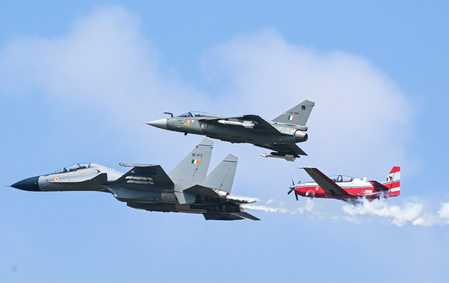
India’s military doctrine and strategic posture have seen a significant change after Operation Sindoor. Defence analysts believe this operation marked a shift towards a more assertive and proactive approach against cross-border terrorism and hostile adversaries. Operation Sindoor emerged as a crucial point in India’s defense policy following the 2025 Pahalgam terror attack by Lashkar-e-Taiba.
The Indian military not only inflicted significant costs on Pakistan during the operation but also prevented Islamabad from gaining any meaningful military advantages. This event showcased India’s increasing readiness to take calculated risks in tackling terrorism and its alleged state sponsors. The country’s military thinking has evolved from the Cold Start Doctrine to the Cold Strike doctrine, emphasizing controlled pre-emption and proactive shaping of adversary moves through swift military power application.
India is now focusing on faster mobilization, compressed operational timelines, and integrated tri-service warfare under this evolving doctrine. The recently conducted “Trishul Exercise” in November 2025 demonstrated synchronized multi-domain operations involving the Army, Navy, and Air Force. This exercise highlighted India’s growing capability to carry out integrated missions under tight time constraints, essential for Cold Strike readiness.
Specialized combat formations like the “Rudra Brigades” and “Bhairav” commando units have been created post Operation Sindoor. The Rudra Brigades are intended for rapid offensive actions against Pakistan in plains terrain, while the Bhairav units are designed for mountainous operations along the Pakistan and China borders. These organizational changes reflect India’s focus on high-speed, precision warfare and multi-domain coordination.
India has expedited acquisitions of advanced military systems post the operation, including upgrades to various defense systems. The armed forces are also increasingly incorporating drones into military planning, with the introduction of “Shaurya Squadrons” for surveillance, precision strikes, and logistics support. The emphasis on jointness and integrated warfare has also grown, with the release of various doctrinal papers aimed at enhancing interoperability among the three services and building mission-centric readiness.
