


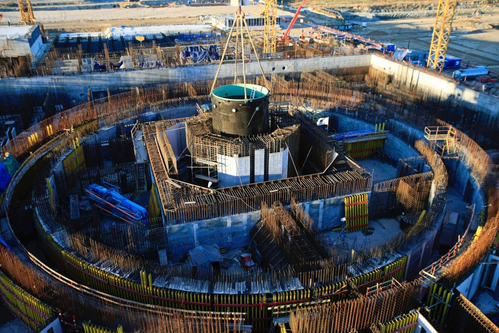
India’s current nuclear capacity stands at 8.2GW, contributing around 2% of the country’s electricity generation. Morgan Stanley views nuclear power as a strategic complement to renewables, offering stable, low-carbon base-load power. Compared to global counterparts, India’s nuclear energy sector has room for significant growth.
The Indian government targets 22 GW of nuclear power by F32, with a long-term goal of reaching 100 GW by 2047. The launch of a dedicated Nuclear Energy Mission, backed by Rs 200 billion for small modular reactor development, signals a shift towards more adaptable and potentially private sector-friendly nuclear initiatives. Legislative reforms under the SHANTI framework aim to enhance the regulatory landscape and encourage increased private sector involvement.
Successful implementation of these strategies hinges on factors like financing, regulatory changes, and supply chain development. International collaborations, especially with Canada supplying uranium under a new agreement, are crucial for India’s nuclear expansion. The US’s involvement in India’s nuclear sector is more technology-oriented, with recent advancements in small modular reactor technology transfer and commercial interests.
India is striving to become a global hub for clean energy manufacturing, supported by policies like PLI. While the focus is on quality and global competitiveness, challenges persist in procurement practices and supply chain deficiencies.
