


India’s seaweed production has significantly increased over the past decade, nearly tripling from 18,890 tonnes in 2015 to 74,083 tonnes in 2024. The government, through Union Minister of State for Fisheries George Kurian, is emphasizing seaweed as a key sector for coastal livelihoods and bio-based industries. This push includes policy support to enhance production, processing, and value addition in the seaweed industry.
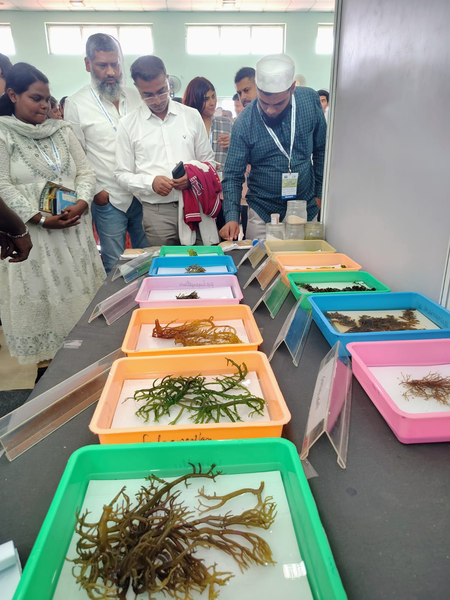
At the 7th India International Seaweed Expo and Summit, held at the ICAR–Central Marine Fisheries Research Institute (CMFRI), Kurian highlighted India’s potential for substantial growth in seaweed cultivation and downstream industries. The PM Dhan-Dhaanya Krishi Yojana has incorporated seaweed as an output component, focusing on 100 aspirational districts nationwide. In Kerala, Kozhikode, Kannur, and Kasaragod have been identified for integrating seaweed farming into broader rural and coastal development initiatives.
The government aims to boost farmer participation, strengthen supply chains, and create employment opportunities, especially for fishers and women in coastal regions. The event, jointly organized by the Indian Chamber of Commerce, CMFRI, and the Central Salt & Marine Chemicals Research Institute (CSMCRI), brings together policymakers, scientists, and industry stakeholders to drive the seaweed sector forward.
National Fisheries Development Board (NFDB) Chief Executive B.K. Behera stressed the need to establish large-scale processing plants to support commercial seaweed production. He emphasized the importance of enhanced coordination among ministries and implementing agencies to spur sectoral growth and attract private investment. The expo highlighted various industrial applications of seaweeds, from food and nutraceutical products to non-food uses like bio-fertilisers, animal feed, and bioplastics.
The event also showcased innovations in sustainable packaging and marine-based inputs, drawing participation from delegates across more than 10 countries, including the US, Australia, France, and Indonesia. The summit serves as a business-to-business (B2B) platform to foster partnerships along the seaweed value chain, encompassing cultivation, processing, and exports.
