


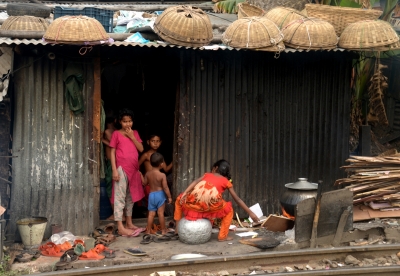
A recent report emphasizes that without changes in the policy framework, inequality will continue to be deeply rooted in Bangladesh. The wealthiest 1% in the country now possess 24% of the total wealth and received 16% of the national income in 2024, as per the ‘World Inequality Report.’ The tax system in Bangladesh is described as regressive, heavily relying on value-added tax (VAT) that disproportionately affects the poor rather than income tax. Additionally, the absence of inheritance tax further protects the wealthy, with the wealth limit for surcharge-free status raised to Tk 4 crore in the 2023-24 budget.
Economists stress that merely a change in government will not address the issue of inequality effectively. Anu Muhammad, a former chairman of the economics department at Jahangirnagar University, highlights the necessity for a progressive tax policy centered on income tax to combat entrenched inequality. Muhammad also points out the inadequacies in the social safety net, high costs of education and healthcare, and the impact of unaccounted black money on exacerbating inequality in the country.
The report underscores that Bangladesh is experiencing a rise in inequality, with the Gini coefficient, a measure where 0 signifies perfect equality and 1 indicates perfect inequality, steadily increasing over the years. From a relatively equitable 0.36 in 1974, the country’s income inequality reached 0.50 by 2022, while wealth inequality surged to a concerning 0.84. The report attributes this persistent inequality to political capture, noting that the tax policy meant for redistribution has been exploited by the wealthy elite.
Furthermore, the labor market in Bangladesh mirrors this imbalance, with around 85% of jobs originating from the informal sector, often lacking formal contracts, job security, or adequate leave provisions.
