


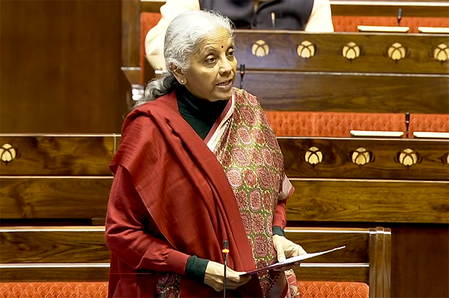
As India prepares to present the Union Budget 2026-27 in Parliament on February 1, investors are keen on the debt metrics, deficit outcome, and planned borrowings for the upcoming fiscal year. DBS Bank highlighted that the size of borrowings will be a crucial factor for the bond markets. Radhika Rao, Executive Director and Senior Economist at DBS Bank, projected that net borrowings for FY27 could increase to Rs 12 lakh crore, representing 73% of the deficit, with gross borrowings potentially reaching Rs 16.5 lakh crore.
The Economic Survey 2025-26 forecasted a growth rate of 6.8-7.2% for FY27, slightly lower than the current year’s 7.4%, but exceeding market expectations. The survey emphasized the impact of geopolitics and global uncertainties on India, presenting three risk scenarios. It stressed the importance of fortifying domestic fundamentals to mitigate external risks, given the possibility of a deteriorating global environment.
The upcoming Budget may see a reduction in gross supply if there are plans for more switches to extend some FY27 maturities. However, this strategy must be balanced with the subdued demand for long-term papers. The report also mentioned the possibility of lowering the FY28 maturities through switches in the following year, which could lead to a rise in INR bond yields.
Additionally, expert group recommendations have been made for revising the Consumer Price Index (CPI) base year to 2023-24 from the current 2011-12. The revised CPI, scheduled for release on February 12, will reallocate weightage from food and beverages to services (excluding education) to reflect changing consumption patterns. The report indicated a slight increase in the new CPI due to the revised weights, with potential implications for periods of high food inflation.
