


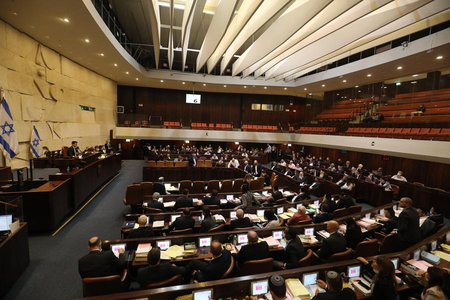
Israel’s parliament has passed a law to create a special military tribunal for Palestinians linked to the Hamas-led assault on October 7, 2023. This tribunal is granted the authority to issue the death penalty, a punishment that has not been enforced in Israel since 1962. The legislation has faced criticism from various rights organizations. Adalah, a legal group advocating for Arab minority rights in Israel, expressed concerns about the denial of basic procedural protections to suspects, essential for a fair trial.
The new law, which follows a previous legislation from late March, designates the death penalty as the default punishment for Palestinians convicted of lethal attacks. This move has sparked international condemnation, with critics labeling it as discriminatory and unconstitutional. Opponents argue that the law establishes a distinct legal framework based on identity, raising significant human rights issues. Under this law, the death penalty would be applicable to Israeli individuals found guilty of murder only if the crime was committed with the intent of “ending Israel’s existence,” a provision that critics say could disproportionately target Palestinians while exempting Jewish Israelis facing similar charges.
Additionally, the law stipulates that executions must be carried out within 90 days of sentencing, with limited grounds for postponement and no provision for clemency. While courts have the discretion to opt for life imprisonment in undefined “special circumstances,” the law’s critics remain concerned about the potential implications on human rights. The October 7 attack, as per Israeli reports, resulted in approximately 1,200 casualties in Israel, including the abduction of over 250 hostages. This incident led to a large-scale Israeli military operation in Gaza, causing extensive destruction in the Palestinian territory and claiming the lives of at least 72,737 individuals, according to health authorities in Gaza.
