


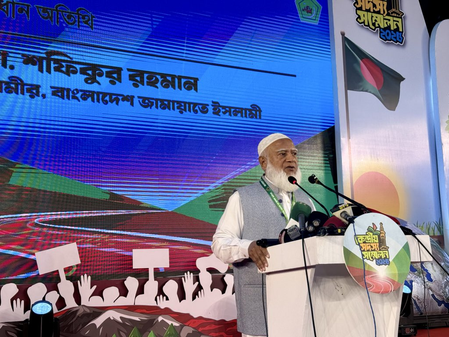
Despite being the second-largest political force in Bangladesh’s recent 13th Parliamentary election, Jamaat-e-Islami faced challenges in translating its numerical strength into significant political achievements. The party’s historical decisions, ideological inflexibility, and controversial past have hindered its success, as highlighted in a report. Jamaat-e-Islami’s founder, Maulana Maududi, shifted to Pakistan post-partition, where the party resorted to armed struggles to enforce its Islamic ideology.
The report underlines Jamaat-e-Islami Pakistan’s violent history, with its student wing engaging in disruptive activities in educational institutions. The organization’s tactics included booth capturing, candidate kidnappings, murders, and violent intimidation in the guise of upholding their version of Islam. Various universities in Pakistan became centers of violence due to their actions.
During the tumultuous period when East Pakistan sought independence from West Pakistan, Jamaat-e-Islami in Bangladesh sided with the Pakistani army instead of supporting Bengali Muslims. This decision led to the party’s involvement in the killings of Bengali Muslims, further tarnishing its reputation. The report emphasizes that Jamaat-e-Islami’s political ideology and imposed version of Islam face challenges in South Asia, necessitating grassroots-level transformations for any chance of success.
The report concludes by highlighting the global awareness of Jamaat-e-Islami Pakistan’s policies and the memories of Bengali Muslims regarding the party’s past actions in Bangladesh.
