


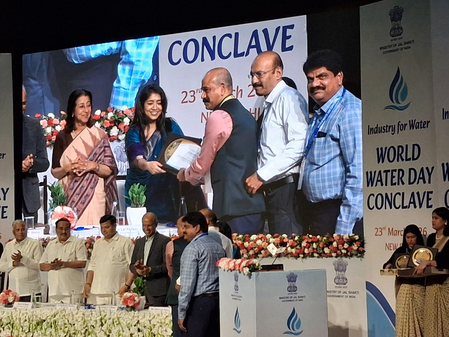
The Ministry of Jal Shakti, Government of India, has praised the Karnataka Minor Irrigation and Groundwater Development Department for accomplishing the state’s First Spring Census within the set timeframe. B.K. Pavithra, Secretary of the department, was honored with a certificate of appreciation for this achievement. The census, conducted under the Irrigation Census Scheme with guidance from the Ministry of Jal Shakti, identified and documented 274 springs across all 31 districts of Karnataka.
Sharing insights from the final report, Secretary Pavithra highlighted that despite challenges during the monsoon season, field enumerators successfully identified the springs. Belagavi district recorded the highest number of springs at 59, with a majority remaining active – 144 classified as perennial, 114 as seasonal, and 16 dried up. The report revealed a rural concentration of the springs, with 256 in rural areas and only 18 in urban areas.
In terms of geological discharge, the census found 117 free-flowing springs and 157 seep springs. Additionally, unique hydrological features were documented, including a hot spring at Bendru Theertha in Dakshina Kannada district. The census report emphasized the ecological and cultural importance of these springs in Karnataka, serving as crucial sources for major river systems. It also mapped the origins of key rivers in the state, such as the River Cauvery, River Hemavathi, and River Sharavathi.
The digitized data from the census will play a vital role in future spring conservation, rejuvenation projects, groundwater management, and comprehensive water resource planning in Karnataka.
