


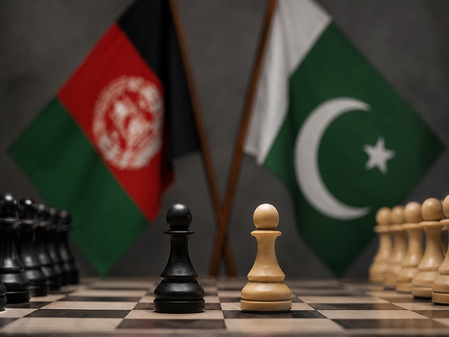
Even as Pakistan positions itself as a mediator between the United States and Iran, its conflict with Afghanistan remains unresolved, causing concern in the region. Astana has now expressed readiness to mediate between the two neighboring countries if formally requested by both sides, as stated by Serik Zhumangarin, Kazakhstan’s Deputy Prime Minister and Minister of National Economy.
Kazakhstan’s consistent stance advocates resolving disputes through dialogue, with President Kassym-Jomart Tokayev urging Afghanistan and Pakistan to settle their differences through talks. The ongoing conflict between Pakistan and Afghanistan has led to deep uncertainty in the region, with fears of further escalation that could be exploited by militant groups, destabilizing the area.
Amid border clashes along the Durand Line and trade route closures following fierce skirmishes in October 2025, the instability poses a threat to the connectivity between Central Asia and South Asia. The situation has also strained Pakistan’s economy, with Islamabad blaming Kabul for harboring Tehreek-e-Taliban Pakistan militants while Kabul accuses Pakistan of sheltering ISIS members.
Neighboring countries are concerned about the volatility escalating and disrupting the region, prompting various nations to host peace talks between Afghanistan and Pakistan. Despite international efforts, including UN assistance in Afghanistan, the conflict persists, marked by aerial attacks and border skirmishes between the two nations.
The ongoing conflict between Afghanistan and Pakistan continues to overshadow Pakistan’s diplomatic efforts to mediate between the United States and Iran. While seeking a role as a peace facilitator on the global stage, Pakistan’s credibility as a mediator is questioned due to its own unresolved conflict with Afghanistan. Kazakhstan’s offer to mediate further underscores this contradiction, emphasizing regional concerns and the complexities of Pakistan’s dual role in conflict and peace negotiations.
