


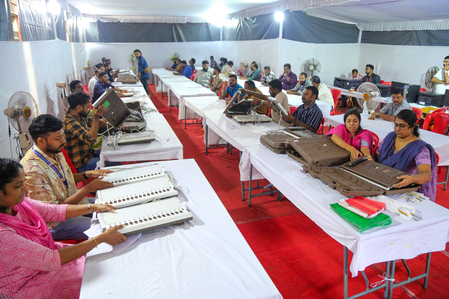
With less than 24 hours until voting begins in Kerala’s 140 Assembly constituencies, the upcoming election is marked by its complexity and significance. A total of 883 candidates are contesting, averaging six to seven contestants per seat, with some constituencies witnessing crowded battles due to rebels and Independents. The electorate comprises 2.7 crore voters spread across over 30,000 polling stations, setting the stage for a high-turnout election in politically active Kerala.
The ruling Left Democratic Front (LDF), under Chief Minister Pinarayi Vijayan, made history by retaining power in 2021, breaking the state’s tradition of alternating governments. However, after a decade in power, signs of discontent are emerging, primarily directed at local representatives rather than the leadership. Issues such as governance fatigue, local grievances, and unmet expectations are simmering beneath the surface, shaping the political landscape.
Both the LDF and the United Democratic Front (UDF) are interpreting the electorate’s mood in their favor. While the LDF emphasizes continuity, welfare delivery, and organizational strength, the UDF is banking on local dissatisfaction and support base consolidation. The Bharatiya Janata Party (BJP), on the other hand, aims to enhance its relevance in Kerala rather than focusing on forming a government.
In Kerala’s finely balanced political environment, even slight shifts in voter preferences could have significant implications in certain constituencies. Voter turnout, historically between 70 and 80 percent, remains a crucial factor that can sway outcomes across multiple seats. This election is characterized by nuanced dynamics and fragmented signals rather than a sweeping wave, with the final verdict likely emerging from numerous micro-level battles across the state.
All political fronts are aware of the importance of minority communities, particularly Muslims and Christians, who constitute around 42 percent of the population. The outcome of the election may hinge on which way these communities lean, as demonstrated in previous polls. Security measures are stringent, with approximately 2,500 sensitive booths out of the 30,000 being closely monitored by Central forces and units of the Tamil Nadu Police.
