


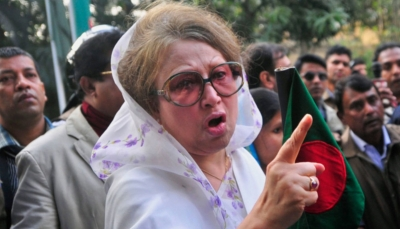
Khaleda Zia, a three-time Prime Minister of Bangladesh and leader of the Bangladesh Nationalist Party (BNP), passed away at the age of 80 after a prolonged illness. Zia, the first female Prime Minister of Bangladesh, played a significant role in shaping the country’s post-independence history for over four decades.
Born in 1945 in Jalpaiguri, India, Zia later moved to East Pakistan and married Ziaur Rahman, who became the President of Bangladesh in 1977. Following Rahman’s assassination, Zia assumed leadership of the BNP, eventually becoming its chairperson for a tenure spanning nearly 41 years.
During her time as Prime Minister, Zia’s approach towards India was marked by resistance to overland transit and connectivity initiatives. She opposed granting India transit rights through Bangladesh, citing concerns over security and sovereignty. Zia also criticized diplomatic agreements like the Indo-Bangladesh Friendship Treaty, framing her policies as safeguards against perceived Indian dominance.
Zia’s tenure saw strained relations with India, characterized by disputes over issues such as the Farakka Barrage and defense cooperation with China. However, her stance towards India showed signs of change post-2012, with efforts towards improved relations, culminating in engagements with Indian leaders like Prime Minister Narendra Modi.
Despite periods of tension, Zia’s political life was defined by a complex relationship with India, marked by confrontation and evolving dynamics. Her passing marks the end of an era that significantly influenced Bangladesh’s engagement with its neighboring country.
