


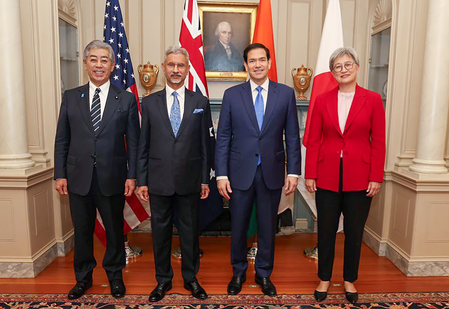
Lawmakers in the US raised concerns about the Quad’s visibility in the country’s Indo-Pacific strategy. The State Department defended the Quad, emphasizing its importance in balancing China’s influence. The Quad, comprising the US, India, Japan, and Australia, was described as a crucial platform for cooperation among like-minded partners.
Democratic Representative Sydney Kamlager-Dove expressed worries about the Quad’s limited mention in the national security strategy. She urged officials to recognize the strategic significance of the Quad in the region. Assistant Secretary of State Paul Kapur affirmed the Quad’s importance, highlighting its role in broader Indo-Pacific objectives.
Kapur rejected claims of the Quad’s downgrade, emphasizing its growth in significance since its revival during the first Trump administration. He stressed the Quad’s role in preventing any single power, particularly China, from dominating the Indo-Pacific region. Republican Representative Keith Self questioned the Quad’s assertiveness in countering Beijing, to which Kapur emphasized the members’ importance.
Lawmakers highlighted bipartisan support for the strategy of preventing any single power from dominating South Asia and the Indian Ocean. The Quad, established in 2007 and revitalized in 2017, has become a key mechanism for regional coordination in the Indo-Pacific. The Quad’s focus includes maritime security, technology cooperation, and enhancing regional resilience amid escalating competition with China.
