


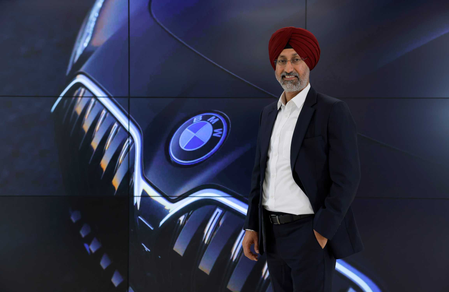
Lowering customs duties on imported cars as part of the proposed India-EU free trade agreement could significantly expand India’s small luxury car market, according to BMW Group India President and CEO Hardeep Singh Brar. Currently, luxury cars account for only about one percent of India’s overall passenger vehicle market, indicating substantial growth potential with eased import duties.
Brar expressed confidence in India’s long-term growth prospects, emphasizing the country’s transition into a future-ready economy supported by reforms and policies aimed at fostering global competitiveness. He highlighted the potential of the India-EU Free Trade Agreement to enhance trade relations, facilitate technology exchange, and drive innovation for both parties.
In the automotive sector, Brar stressed the importance of incorporating balanced and mutually beneficial provisions in the agreement to bolster demand for luxury vehicles and enhance supply chains, particularly amidst global geopolitical uncertainties. He specifically mentioned that a reduction in customs duties on completely built units (CBUs) would make imported luxury cars more affordable and contribute to expanding the luxury car market in India.
Brar pointed out that currently, CBUs represent around five percent of BMW’s total sales in India. By reducing customs duties on CBUs, Brar believes that BMW could diversify its product range, introduce popular global models, and explore new offerings, thereby catering to a broader consumer base and driving market growth.
Moreover, Brar highlighted the potential benefits of lowering duties on luxury cars, noting that such a move would not adversely impact mass-market car manufacturers since luxury vehicles constitute a small segment of India’s passenger vehicle market. He emphasized that this policy change could be mutually advantageous for both India and the European Union.
