


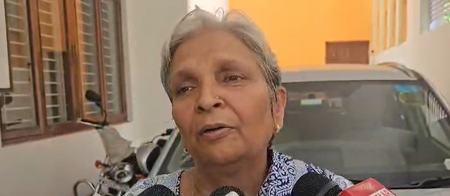
In a significant development, the Madhya Pradesh High Court has revoked the anticipatory bail granted to former district judge Giribala Singh in connection with the dowry death case of her daughter-in-law, Twisha Sharma. The court’s decision overturned the relief provided by a lower court, citing a lack of thorough consideration of crucial evidence from the case diary and witness statements.
Justice Devnarayan Mishra, in his ruling on Wednesday, highlighted that the lower court had not adequately examined key materials, including case diaries, witness testimonies, and WhatsApp conversations, before granting bail to Singh. The High Court emphasized the necessity for a meticulous review of all evidence, especially in cases involving grave offenses like dowry deaths, which continue to be a societal concern.
The cancellation of the anticipatory bail has raised concerns within legal and social circles due to Singh’s background as a former judge. The case, centered on allegations of domestic cruelty, forced abortion, and physical abuse leading to Twisha Sharma’s death in Bhopal, has now shifted focus to potential custody by the Central Bureau of Investigation (CBI).
With the legal proceedings intensifying, the prosecution has accused Singh of contributing to the harassment that allegedly led to Twisha’s demise, despite her judicial experience. Legal experts view the High Court’s decision as a reaffirmation of accountability and a stern stance against dowry-related offenses, emphasizing equal treatment under the law for all individuals.
The ruling signifies the judiciary’s commitment to upholding justice impartially, irrespective of one’s status or background. As the case progresses, with Singh facing imminent arrest and interrogation, the spotlight on dowry-related crimes in India is expected to grow, underscoring the broader societal battle against such practices.
