


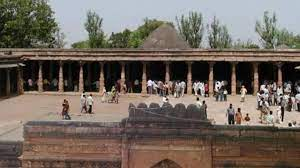
The Madhya Pradesh High Court has scheduled detailed regular hearings for the Bhojshala Temple-Kamal Maula Mosque dispute in Dhar district to begin on April 6. Due to time constraints, the matter could not be fully addressed on Thursday as the bench was only available until 1.30 p.m. Justices Vijay Kumar Shukla and Alok Awasthi have fixed all matters for hearing starting at 2.30 p.m. on April 6, 2026.
On March 16, the bench decided to personally inspect the disputed site, leading to the Maulana Kamaluddin Welfare Society approaching the Supreme Court to request the production of survey videos and photos. The Supreme Court, on April 1, expressed confidence in the High Court’s ability to consider all objections, including those from the ASI videography, during the upcoming hearings.
With regular hearings set to commence next week, the court is expected to review ASI findings, objections from involved parties, and determine the next steps in this longstanding dispute. This development is closely monitored across the state due to its potential impact on communal harmony and heritage preservation.
The Bhojshala monument, dating back to the 11th century and protected by the Archaeological Survey of India (ASI), is at the core of a sensitive religious conflict. Hindus view it as an ancient temple dedicated to Goddess Vagdevi (Saraswati), while Muslims consider it the Kamal Maula Mosque. Since 2003, an arrangement has allowed Hindus to conduct ‘puja’ on Tuesdays and Muslims to offer namaz on Fridays.
In a significant move, the High Court in March 2024 instructed the ASI to conduct a thorough scientific survey using modern techniques to determine the site’s true nature. The survey, to be carried out by a committee of senior ASI officers, involves detailed photography and examination of sealed areas within the complex. The Supreme Court, in April 2024, permitted the survey but with restrictions to maintain the site’s integrity and required approval for any actions based on the findings.
In January 2026, the Supreme Court disposed of related matters, allowing the sealed ASI report to be shared with all parties. Subsequently, the High Court requested stakeholders to submit objections and suggestions regarding the survey report.
