


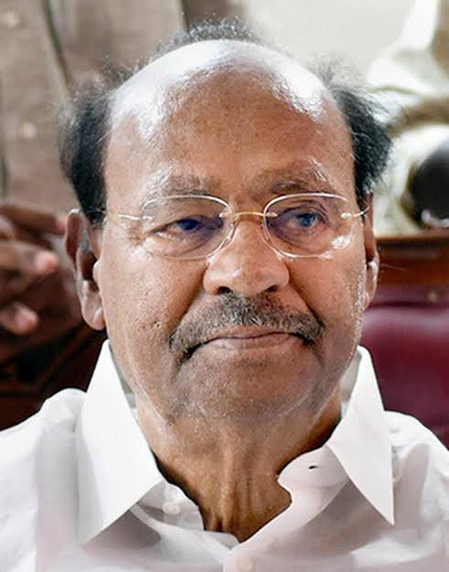
The Madras High Court is scheduled to hear a crucial petition on February 2 filed by PMK founder S. Ramadoss. The petition challenges the Election Commission’s decision to assign the party’s ‘Mango’ election symbol to party president Anbumani Ramadoss through a communication. This legal battle holds significance amidst an escalating leadership conflict within the PMK.
Ramadoss, in his plea to the Madras High Court, questions the legitimacy of a letter from the Election Commission of India that conveyed the allocation of the Mango symbol to the PMK through Anbumani Ramadoss. He seeks the court’s intervention to annul the letter and instruct the election body to direct all symbol-related communications solely to his authorized representative.
The petition alleges that Anbumani Ramadoss’s tenure as PMK president ended in May 2025. Despite this, it claims that he presented falsified documents to the Election Commission, falsely asserting his continued presidency. Based on this, the petitioner argues that Anbumani lacks the legal authority to receive or act on any official communication regarding the party’s election symbol.
Ramadoss further contends that Anbumani cannot assert control over the party by holding organizational meetings without the founder’s consent. These meetings, as per the plea, were conducted against the PMK’s internal constitution and organizational norms, undermining any claims to leadership or symbol rights.
The petition also highlights a significant issue concerning previous proceedings at the Delhi High Court. According to Ramadoss, the Election Commission had pledged during those proceedings to freeze the Mango symbol until the internal PMK dispute was resolved. However, the plea asserts that this assurance was not upheld, as the symbol remains active without being formally frozen.
A Division Bench led by Chief Justice M.M. Shrivastava and Justice G. Arul Murugan will address the matter. The outcome of this hearing is anticipated to have profound implications on the ongoing power struggle within the PMK and its future organizational framework.
