


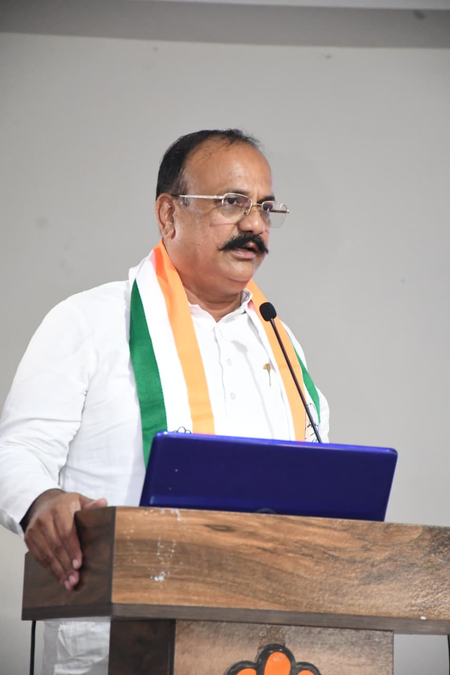
The President of Maharashtra Pradesh Congress Committee, Harshwardhan Sapkal, has issued a stern warning, stating that individuals involved in undermining democracy and tampering with voter lists will face imprisonment soon. Sapkal alleged that the Bharatiya Janata Party (BJP) attained power in Maharashtra through vote theft aided by the Election Commission. He further accused the BJP of deleting voters’ names in Bihar and Bengal to secure victories, emphasizing ongoing attempts to influence elections through voter list revisions.
At a state-level party meeting amidst the Special Intensive Revision (SIR) campaign for voter list updates, discussions centered on alleged irregularities in the voter list, vote manipulation, and the SIR process. Sapkal highlighted the successful conduct of a workshop for Booth Level Agents-1 under the SIR campaign, with comprehensive booth-level planning completed statewide. National-level experts and state office-bearers extensively trained party workers on electoral processes, voter list verification, objections, and corrections.
Expressing confidence in the Congress’s readiness to safeguard every voter, Sapkal announced the establishment of a special committee for the SIR campaign by the Maharashtra Pradesh Congress Committee. Legislative Council Congress group leader Satej alias Bunty Patil was appointed as the committee head, with Abhijit Sapkal serving as coordinator. The committee aims to collaborate with district and taluka-level machinery across Maharashtra to expedite the voter list verification drive.
In a critique directed at Chief Minister Devendra Fadnavis and the state government regarding the petrol and diesel shortage, Sapkal accused the government of neglecting people’s pressing issues. He criticized the Chief Minister’s response to the shortage, labeling him as ‘Ghajini’ and highlighting the government’s lack of attention towards citizens’ challenges. Additionally, Sapkal condemned the BJP for allegedly sowing divisions in society over the reservation issue, advocating for its resolution through a caste-based census.
