


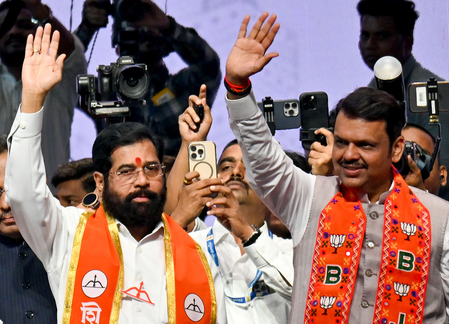
The Mahayuti alliance in Maharashtra is experiencing heightened internal tensions as Shiv Sena, led by Eknath Shinde, employs a strategic approach to assert dominance over the BJP in local civic bodies. Recent political maneuvers in Kalyan-Dombivli and Ulhasnagar municipal corporations have caused a stir within the ruling coalition, leading Chief Minister Devendra Fadnavis to adopt a cautious stance.
In a surprising move, Shiv Sena under Shinde’s leadership has garnered support from Maharashtra Navnirman Sena (MNS) in Kalyan-Dombivli, sidelining the BJP and consolidating 62 seats. This strategic shift not only sidelines the BJP but also deals a blow to Uddhav Thackeray’s Shiv Sena.
Similar tactics are unfolding in Ulhasnagar, where Shinde’s faction is actively engaging independent corporators and members of Vanchit Bahujan Aghadi (VBA) to secure power. With both BJP and Shiv Sena tied at 37 seats each, Shinde aims to reach 40 seats to install a Shiv Sena Mayor, potentially leaving the BJP at a disadvantage.
Political analysts view these moves as a retaliatory response to recent events in Ambernath and Badlapur, where strategic alignments and counter-alignments have taken place. The ongoing power play in Kalyan-Dombivli is perceived as a calculated response to the BJP’s past maneuvers.
In response to Shiv Sena’s tactics, BJP leader Pravin Darekar emphasized the party’s organizational strength and issued a warning against underestimating Devendra Fadnavis. The unfolding political dynamics have also drawn reactions from opposition leaders, with Sanjay Raut of Shiv Sena hinting at potential repercussions for the Shinde-MNS alliance.
As the Mahayuti partners navigate through pre-election dynamics, the BJP’s wait-and-watch approach indicates a potential counter-strategy in the making. Eknath Shinde’s strategic alliances have put the BJP on the defensive, setting the stage for intensified power struggles within the ruling coalition.
