


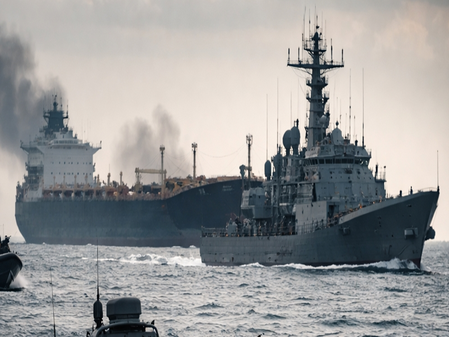
The maritime threat landscape in the Gulf of Oman, Persian Gulf, and the Strait of Hormuz has become highly volatile due to recent military confrontations involving Iran, the US, and Israel. Multiple incidents involving projectiles, missiles, and explosives have targeted commercial shipping, leading to a significant decrease in transits through the critical chokepoint. Since late February, confirmed attacks on merchant vessels have been reported, with several ships damaged or struck, including tankers and a container ship in the Strait of Hormuz and Gulf of Oman approaches.
Casualties have been recorded, with at least one seafarer killed and others injured in incidents involving drone boats, missiles, and near-misses. Shipping traffic has drastically decreased, with only a few crossings in the Strait of Hormuz, a vital route for global seaborne oil and liquefied natural gas transportation. Vessels, including oil tankers and LNG carriers, are now anchored in regional waters or rerouting around the Cape of Good Hope, as major operators like Maersk and Hapag-Lloyd have suspended passages through the Strait of Hormuz.
Compounding the threats, there have been reports of “persistent GPS and AIS jamming,” severely affecting navigation safety. Maritime intelligence firms have observed widespread electronic interference, with over 1,100 vessels impacted in recent days, leading to spoofed positions and heightened collision risks. War-risk insurance providers have responded by canceling coverage in Iranian waters, the Persian Gulf, and adjacent areas from March 5 onwards, forcing ship owners to seek costly alternatives or avoid the region altogether, disrupting commercial operations.
The Joint Maritime Information Center (JMIC) has raised the regional threat level to “CRITICAL,” signaling a high likelihood of attacks. US MARAD advisories recommend vessels to steer clear of the area if possible, maintain a 30-nautical-mile distance from naval assets, and implement enhanced security measures. Merchant vessels are advised to exercise heightened vigilance, verify navigation inputs, and adhere strictly to security protocols while operating in the region. Monitoring of advisories from UKMTO, JMIC, and NAVCENT is crucial as the situation highlights the vulnerability of global energy supply chains amid escalating tensions.
