


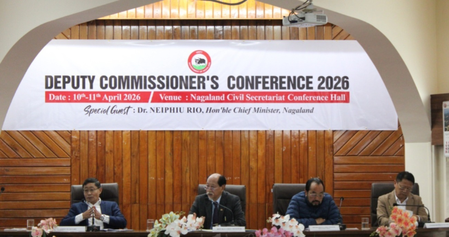
Nagaland Chief Minister Neiphiu Rio discussed the growing global job prospects on Friday. He mentioned that over 450 young individuals have enrolled in the ‘Nagaland Japan Connect 2026’ program, with 65 already receiving job offers in various sectors like agriculture, manufacturing, and shipping.
During the Deputy Commissioners Conference, Rio stressed the importance of creating job opportunities. He highlighted that skill development programs in Nagaland now focus on connecting individuals with job placements through events like job fairs and partnerships.
As of February 2026, more than 73,000 candidates are registered on the Live Register. Efforts are being made to boost participation in employment-related initiatives such as the Nagaland Japan Connect 2026 and the state-wide ‘Mega Job Fair.’
Rio reaffirmed the government’s dedication to empowering youth with meaningful employment opportunities. He emphasized the collaboration between departments, training partners, and financial institutions to enhance connections between skill development, entrepreneurship, and financial support.
The Chief Minister emphasized the evolving responsibilities of Deputy Commissioners in today’s governance landscape. He highlighted the expanded roles of these officials, including disaster management, grievance redressal, and coordination of government schemes.
Rio underscored the importance of transparency and meritocracy in government operations. He mentioned the establishment of the Nagaland Staff Selection Board to ensure fair recruitment for Group-C positions.
Regarding workforce development, Rio discussed the evolution of the Nagaland Skill and Entrepreneurship Development Mission into a system aligned with sectors like construction, hospitality, transport, and IT services. He reiterated the government’s commitment to leveraging human resources for economic growth.
Expressing concerns about Nagaland’s fiscal situation post the 16th Finance Commission’s recommendations, the Chief Minister pointed out challenges due to a decrease in central tax allocation and the absence of Revenue Deficit Grants for the 2026-31 period.
