


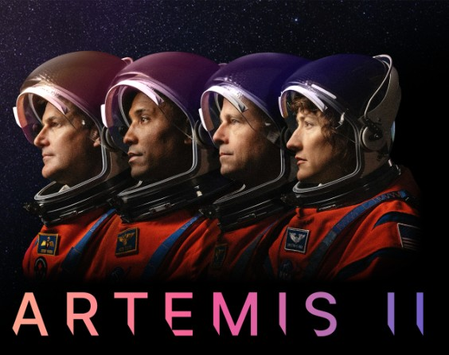
After 50 years since the Apollo 17 mission in 1972, NASA is gearing up to send a team of four astronauts on a journey around the Moon on February 6. The crew for the Artemis II mission includes NASA’s commander Reid Wiseman, pilot Victor Glover, and mission specialists Christina Koch and Jeremy Hansen from the Canadian Space Agency.
In preparation for this historic mission, NASA has moved the Orion spacecraft and the Space Launch System (SLS) rocket to the launch pad in Cape Canaveral, Florida. NASA Administrator Jared Isaacman expressed that Artemis II signifies a significant advancement in human spaceflight, pushing humans farther from Earth than ever before.
The 10-day Artemis II mission will pave the way for Artemis III, scheduled for 2027, where humans are expected to land on the lunar South Pole for the first time. This initiative is part of NASA’s Artemis campaign, aiming to return humans to the Moon for economic benefits, scientific exploration, and to prepare for future crewed missions to Mars.
NASA conducted a successful test of Artemis I in August 2022, marking the first integrated flight test of NASA’s Deep Space Exploration Systems. With Artemis II, NASA will conduct rigorous testing of its Orion spacecraft and deep-space exploration systems under real conditions, although the spacecraft will not land on the lunar surface.
