


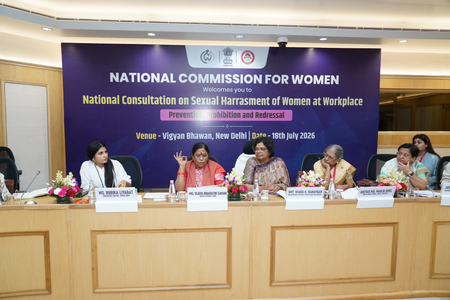
Issues concerning sexual harassment in digital workplaces and safeguarding gig workers, platform workers, and home-based workers were key topics at the NCW’s two-day national program on the POSH Act. The event, which concluded on Saturday, focused on the Sexual Harassment of Women at Workplace (Prevention, Prohibition, and Redressal) Act, 2013. The program brought together legal experts, policymakers, and judges to enhance the implementation of the Act.
Chairperson of NCW, Vijaya Rahatkar, highlighted that the POSH Act is not just a legal framework but a tool of assurance for working women. She emphasized the importance of workplace safety, especially as work environments evolve with digital advancements and hybrid models. Rahatkar stressed the significance of awareness, prevention, and institutional sensitivity in ensuring workplace safety for women.
Experts at the program discussed the need for institutional reforms under the POSH Act. They focused on enhancing institutional accountability, monitoring mechanisms, and adapting the law to the changing work landscape. The participants emphasized that safe workplaces require continuous capacity building, robust grievance redressal mechanisms, and collaborative efforts among stakeholders.
The National Consultation aimed to gather recommendations for a comprehensive report to strengthen the implementation framework of the POSH Act and its Rules. Union Minister for Women and Child Development, Annpurna Devi, highlighted the importance of a dignified workplace for women-led development. She stressed that every woman has the right to work fearlessly and with dignity, emphasizing the shared responsibility of governments, employers, and institutions in creating safe work environments.
