


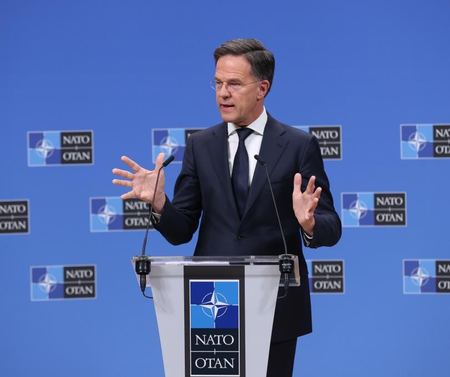
NATO Secretary General Mark Rutte expressed support for US measures against Iran, cautioning that Tehran is on the verge of possessing missile capabilities that could endanger Europe. Rutte, speaking on CBS News’ “Face the Nation,” mentioned NATO’s ongoing assessment of reports suggesting a potential long-range strike on a US-UK base in the Indian Ocean. While Rutte stated that NATO couldn’t confirm the alleged missile attack on Diego Garcia, he emphasized the significance if proven true.
Rutte highlighted Iran’s proximity to targeting major European cities, stating that the country is nearing the acquisition of such capabilities. He underscored the potential global peril posed by a combination of nuclear and missile capabilities in Iran, labeling it as a direct and existential threat to Israel, the region, Europe, and global stability. Rutte supported US efforts to diminish Iran’s military capabilities, warning against delays that could be costly, drawing a comparison with North Korea’s situation.
The NATO chief’s comments come amidst internal tensions within the alliance following criticism from President Donald Trump regarding NATO allies’ support for US operations, particularly in securing shipping routes through the Strait of Hormuz. Rutte acknowledged the concerns raised by Trump but mentioned that coordinated efforts among 22 countries, including NATO members and partners like Japan, South Korea, Australia, and Gulf states, were in progress to ensure safe navigation in the Strait. He outlined the questions being addressed to meet the president’s objectives and secure free passage through the Strait.
Addressing worries about potential strains on NATO unity due to US pressure, Rutte emphasized the alliance’s historical solidarity during crises. He pointed out the increased defense spending commitments made under Trump’s leadership and the continued collaboration on Ukraine as examples of NATO’s cohesion. Rutte defended US diplomatic actions concerning Ukraine, highlighting the complexity of balancing various interests while striving for a negotiated resolution to the conflict.
