


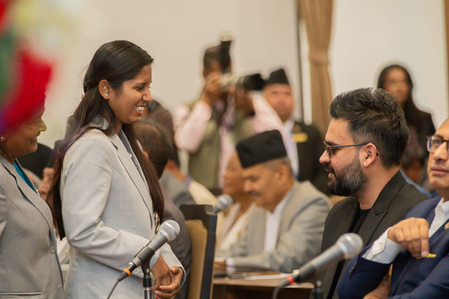
Nepal’s newly-elected Deputy Speaker of the House of Representatives, Rubi Kumari Thakur, has declared her refusal to attend weddings involving dowry transactions. Thakur, aged 26, made history by becoming the youngest individual to hold this position in the country’s political landscape following her election on April 9. She emphasized her commitment to combatting the dowry system, a significant cause of domestic violence, especially within the Madhesi community in Madhes Province, her place of origin.
After assuming office as a legislator, Thakur expressed disappointment at the absence of ‘dowry-free marriage’ mentions on wedding invitations she received. She highlighted the societal failure to eradicate the deep-rooted issue of dowry, stressing that not only the exchange of dowry but also endorsing such transactions or attending related events is socially unacceptable and legally punishable. Thakur emphasized that these practices directly undermine women’s dignity, equality, and rights.
Thakur firmly stated her decision not to partake in weddings where dowry transactions occur, urging for the promotion of dowry-free, equality-based, and dignified marital ceremonies. She called on individuals to explicitly include ‘Dowry-free marriage; giving and taking dowry is a social and legal offence’ on wedding invitation cards. Her stance comes amidst persistent concerns over the prevalence of dowry customs despite legal restrictions and increased awareness campaigns.
The issue of dowry remains a pressing concern in Nepal, with Nepal Police recording 10 dowry-related complaints in the fiscal year 2023–24, the majority originating from Madhes Province. Despite efforts to combat the practice, it persists across various socio-economic groups, primarily affecting the Madhesi community. The Penal Code (Act) 2074, enacted in 2017, strengthened Nepal’s laws against dowry payments in marriages, recognizing it as a significant factor contributing to domestic violence and early marriages, particularly among young girls.
