


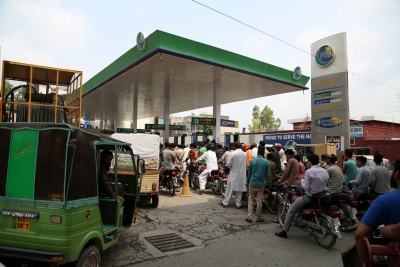
Geopolitical tensions in West Asia have persisted for 22 days, leading to reported damage to major oil fields on both sides. Pakistan, an energy-import dependent economy, is at an increased risk of economic and financial instability due to these developments. The country’s domestic crude production is limited to about 81,000 barrels per day, while its consumption stands at nearly 480,000 barrels, resulting in a significant import dependence of over 100 percent.
Around 80 percent of Pakistan’s crude oil and almost all liquefied natural gas imports pass through the Strait of Hormuz, mainly from Gulf suppliers, leaving the nation vulnerable to external shocks. These vulnerabilities are deeply rooted and challenging to address, posing a serious threat to Pakistan’s economic stability. Pakistan heavily relies on imported fuels for sustaining industrial operations, electricity generation, and transportation, making it highly exposed to fluctuations in global energy markets.
Despite longstanding awareness of the issue, Pakistan has struggled to reduce its dependence on imported energy sources. Any instability in the Strait of Hormuz would significantly impact Pakistan’s oil import bill, straining its foreign exchange reserves that are already under pressure. The recent surge in oil prices has further exacerbated Pakistan’s macroeconomic fragility, with higher energy costs translating into inflation, affecting lower- and middle-income households disproportionately.
The country’s slow progress in implementing structural reforms has hindered efforts to diversify energy sources, enhance domestic production, and invest in renewable energy. While Pakistan has considerable solar and wind energy potential in regions like Sindh and Balochistan, policy inconsistencies and financial constraints have impeded large-scale development. Energy inefficiency, characterized by high transmission losses, outdated infrastructure, and weak regulatory enforcement, continues to drive up demand and reliance on costly energy imports.
