


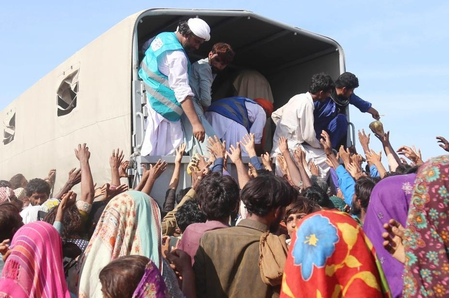
Pakistan’s population is rapidly increasing, straining the country’s systems to their limits. The health leadership warns that Pakistan might soon become the world’s fourth most populous nation. With an annual addition of 6.2 million people, Pakistan’s total population has surpassed 255 million, making it one of the most densely populated countries globally. Despite sporadic attention over the years, the growth rate shows no signs of slowing down.
The surge in population is overwhelming hospitals, already operating at full capacity with limited resources. This surge in patients widens the gap between demand and availability, impacting both access to and quality of healthcare. Similarly, the education sector is struggling to keep up, with overcrowded classrooms and insufficient facilities in both rural and urban areas.
Water scarcity is emerging as a critical concern in cities, which are expanding without proper planning or infrastructure development. Informal settlements lacking basic services like sanitation and clean water are on the rise. Job creation has not matched the pace of population growth, leading to increased unemployment and underemployment, particularly among the youth.
Access to family planning services remains limited in many parts of Pakistan, influenced by social and cultural norms. The report underscores that the high rate of population growth is sustained by a combination of restricted access, cultural practices, and weak primary healthcare systems. As projections indicate further growth, the challenges posed by this demographic trend are becoming more pronounced, shaping the country’s future trajectory.
